
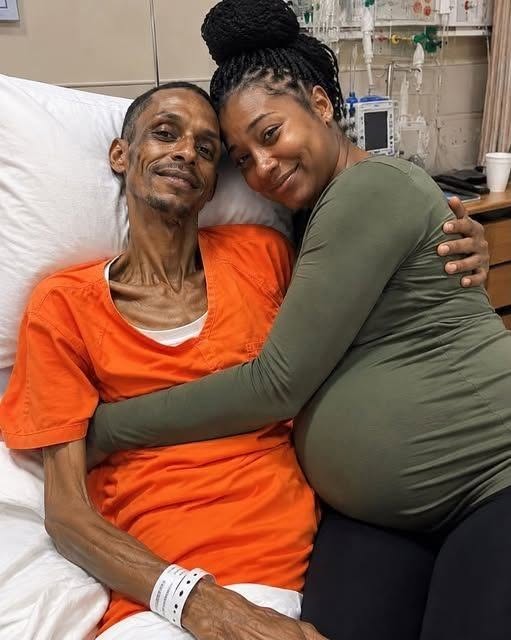
An emotional story about love, betrayal, family secrets, forgiveness, and the unexpected bonds that can emerge from grief.
A Final Wish She Never Expected
Sarah had been married to Mark for three years when she finally discovered she was pregnant. After months of hoping and dreaming about becoming parents, they were preparing to welcome the daughter they had always wanted.
But their happiness was short-lived.
Six months into the pregnancy, Mark received devastating news. He had a serious illness, and his doctors believed he had no more than three months to live.
The thought of never meeting his daughter broke his heart.
One evening, as they sat together on the porch, Mark rested his hand gently on Sarah’s pregnant belly.
“If my organs are healthy enough when the time comes, I want to donate them,” he told her.
Sarah looked at him with tears in her eyes.
“Please don’t talk about dying while she’s kicking.”
“That’s exactly why I have to,” Mark replied softly. “If I can’t watch her grow up, maybe I can help someone else have more time with their family.”
Sarah held his hand, wishing there were something she could say to make the future less frightening.
She had no idea that Mark was keeping another secret—one that would change her understanding of their marriage forever.
The Secret Mark Took to the Hospital
As the weeks passed, Mark grew weaker. Sarah helped him get dressed, prepared his meals, and tried to remain hopeful even when she could see how much pain he was hiding.
During the final weeks of his life, Mark began asking to speak privately with his doctor.
Whenever Sarah asked what they discussed, he gave her the same answer.
“There is something I need to arrange. Please trust me.”
It was unusual for Mark to keep things from her, especially when they had so little time left together. Still, Sarah respected his wishes.
Mark eventually passed away in the hospital, holding her hand.
Heartbroken, Sarah signed the final organ donation documents, determined to honor the promise they had discussed on the porch.
As she prepared to leave the hospital, Mark’s doctor hurried after her.
“Sarah, please wait. There is something I need to give you.”
He held out a small envelope.
“Mark gave me this three weeks ago. He asked me to make sure you received it only after he was gone.”
Sarah immediately recognized her name on the envelope. It was written in Mark’s handwriting.
Her hands trembled as she opened it.
Inside was a folded letter and a photograph of a woman standing beside a little boy.
On the back, Mark had written four words:
Please take care of them.
Sarah stared at the photograph.
The boy appeared to be around five years old. He had familiar grey-green eyes and a slight downward tilt at the corners that reminded her painfully of Mark.
“Who are they?” she whispered.
The doctor lowered his gaze.
“Mark asked me to let you read the letter before anyone explained anything.”
Sarah unfolded the paper.
The first sentence made her heart stop.
By the time you read this, you will already have helped someone receive a part of me. But there is something else I need you to know—something I should have told you long ago.
The Letter That Changed Everything
Sarah forced herself to keep reading.
Mark explained that the woman’s name was Diane. They had been together for two years before he met Sarah.
Eight months after their relationship ended, Diane had contacted him with news that she was pregnant.
She told him the baby was his.
Mark admitted that he had been frightened. Instead of facing the situation, he convinced himself that the timing might be wrong and that Diane would manage without him.
He made excuses.
He avoided difficult conversations.
Most importantly, he stayed away.
The boy’s name was Daniel. He was five years old, and Mark had never met him.
Then Mark explained why he was finally telling Sarah the truth.
Six weeks earlier, he had learned that Diane was seriously ill. Although she had a chance of recovering, she had limited support nearby, and Daniel depended on her.
Mark had tried to find a way to tell Sarah about his son. Shame and fear had kept him silent for too long.
Now, with his life coming to an end, he wanted to make one final attempt to help the child he had never known.
He wrote:
I am not asking you to raise him. I am not asking you to forgive me immediately. I am asking you to make sure he is not alone, whatever that looks like and whatever you can manage.
You are the most decent person I have ever known. That is why I am asking you.
I am sorry. I am so sorry.
Sarah folded the letter carefully.
Mark had loved her, but he had also hidden a child from her for years. While she had been building a future with him, another family had been living with the consequences of his absence.
She felt shock first. Anger would come later.
For now, she could only look at the photograph and wonder what a five-year-old boy was supposed to do after losing a father he had never met.
The Second Betrayal
That evening, Sarah’s mother-in-law, Ruth, called to ask how she was coping.
Sarah initially tried to avoid the conversation, but eventually she mentioned the letter.
There was a pause on the other end of the line.
Then Ruth asked quietly, “Did he tell you about the boy?”
Sarah froze.
“You knew?”
Ruth admitted that she had learned about Daniel two years earlier. Mark had asked her to keep the secret, promising that he would tell Sarah when the time was right.
But the right time never came.
“He was my son,” Ruth explained. “He was sick and frightened, and I didn’t know what to do.”
Sarah struggled to contain her emotions.
“I understand that he was your son. But he was my husband.”
She ended the call, unable to continue.
Mark’s secret had hurt her deeply. Discovering that Ruth had known about it for two years made the pain even more complicated.
Sarah had trusted both of them.
Now she needed time to understand what that trust meant.
Yet, whenever she looked at Daniel’s photograph, she remembered that an innocent child was involved in a situation he had never chosen.
Whatever she felt about Mark, Daniel was not responsible for his father’s mistakes.
Reaching Out to Diane
Three days later, Sarah decided to contact Diane.
She found a public professional profile and called the dental practice where Diane worked. Rather than asking for private information, she left her name and number and requested that the receptionist pass along a message.
Diane called back that afternoon.
“My name is Sarah,” she explained. “I was married to Mark.”
The silence that followed was uncomfortable.
Sarah continued carefully.
“Mark passed away a few days ago. He left me a letter telling me about Daniel. I’m not calling to blame you. I just wanted to speak with you because he asked me to make sure Daniel wasn’t alone.”
Diane sounded surprised.
“He told you about us?”
“He did, in his letter.”
Diane explained that she had undergone surgery recently and was recovering. A neighbor and a friend had been helping her care for Daniel, but she was still trying to manage everything.
She also admitted that she had considered contacting Mark when she learned he was seriously ill.
She had hesitated because she did not know whether reaching out would make an already difficult situation worse.
“Did Daniel know his father?” Sarah asked.
“No,” Diane replied. “He knows his father was sick and has passed away. But he never met him.”
Sarah looked out the window at the bare garden.
“Would it be all right if I came to visit you? I don’t want to make decisions about your life. I’d just like to meet you and Daniel, if you’re comfortable with that.”
After a moment, Diane agreed.
“Come on Saturday,” she said. “I’ll make coffee. Daniel will probably show you every toy he owns within ten minutes.”
For the first time since opening Mark’s letter, Sarah felt that there might be a way forward.
She still had no clear plan. She was heavily pregnant, grieving her husband, and trying to make sense of a secret that had changed everything.
But she had taken the first step.
Meeting the Boy With Mark’s Eyes
On Saturday, Sarah drove to Diane’s modest home.
A small tricycle stood beside the front steps, and children’s toys were visible through the window.
Diane greeted her warmly, though the exhaustion of her recent illness was still apparent.
“Come in,” she said. “Daniel is in the living room.”
The boy was sitting on the rug, building a rocket out of wooden blocks.
When Sarah entered, he looked up.
“Hi,” he said.
“Hi. I’m Sarah.”
“I’m Daniel.” He held up his creation. “This is a rocket.”
“That’s a very good rocket,” Sarah replied.
He studied it seriously.
“It needs more on top.”
Then he returned to his building.
Sarah could hardly look away.
Daniel had Mark’s eyes. The resemblance was unmistakable, and seeing it in person was more painful than looking at the photograph.
But Daniel was also his own person: a curious little boy with an imagination, a favorite toy, and a life that had continued without knowing the father he resembled.
Sarah and Diane sat in the kitchen while Daniel played nearby.
Diane spoke honestly about the past. She had tried to reach Mark after Daniel was born, but when he did not respond, she eventually stopped trying.
“I was angry for a long time,” Diane admitted. “But Daniel is the best thing in my life. I can’t regret having him.”
Sarah understood that the situation was not simple.
Mark had made a choice that hurt Diane and deprived Daniel of a relationship with his father. Yet neither of them could change the past.
“What do you need most right now?” Sarah asked. “Practically speaking.”
Diane explained that she would soon return to work full-time. She needed reliable arrangements for school pickups, and Daniel had begun asking questions about why he did not have a father like his friends did.
“I don’t always know what to tell him,” Diane confessed. “I’m trying to be honest without making him carry things he is too young to understand.”
Sarah nodded.
“I don’t think anyone knows exactly what to do in a situation like this.”
They talked for nearly two hours.
Sarah did not promise to become Daniel’s parent or to solve every problem Diane faced. She had a daughter arriving soon and needed time to rebuild her own life.
But she made one thing clear.
“I don’t want to make a promise and disappear. I want to figure out what staying in touch could look like.”
Diane smiled.
“He wrote you a good letter.”
“He did,” Sarah replied. “Even if it came far too late.”
From the living room, Daniel announced that his rocket was ready for launch.
The two women turned to watch him lift it above his head and make an enthusiastic whooshing sound.
Sarah placed a hand on her belly as her daughter shifted.
She had not chosen this situation, and she could not undo what Mark had done. But perhaps she could help create something better from what remained.
Welcoming Josephine Into the World
Three weeks later, Sarah gave birth to a baby girl.
She named her Josephine Ruth, honoring her own grandmother and Mark’s mother.
The baby arrived in the early hours of the morning, healthy and loud, with dark hair and a determined expression.
Ruth was waiting at the hospital. When Sarah invited her to meet the baby, she approached carefully, holding Josephine as though she were afraid of doing something wrong.
“I’m sorry,” Ruth whispered. “I should have told you.”
Sarah looked at her for a long moment.
“I know.”
“Can you forgive me?”
“Not yet,” Sarah answered honestly. “But I think I will be able to.”
Ruth nodded. She did not argue or ask for more.
For Sarah, that mattered.
Forgiveness would take time, and it could not erase what had happened. But she was willing to leave room for the possibility that their relationship might eventually heal.
Diane also sent flowers to the hospital. The small card read:
Congratulations. She’s lucky to have you.
It was signed by Diane and Daniel.
Sarah kept the card.
A Brother Her Daughter Had Never Met
The first weeks of motherhood were exhausting.
Sarah learned to feed Josephine in the middle of the night, survive on interrupted sleep, and find comfort in the smallest routines.
Sometimes, while holding her daughter in the darkness, she told her stories about Mark.
She remembered the way he hummed while washing dishes, the smell of their porch in summer, and the time he had driven in the wrong direction because he refused to admit the GPS was right.
She did not want Josephine to remember her father only through his mistakes.
But she would not hide the truth from her forever, either.
One night, while Josephine fed quietly in her arms, Sarah whispered:
“You have a brother. His name is Daniel. He’s five years old, he builds rockets, and he has your dad’s eyes.”
Josephine was too young to understand.
Sarah continued anyway.
“When you’re older, you’ll meet him. I’ll make sure you have that chance.”
The promise was not a solution to everything. It was simply a commitment to give both children an opportunity to know one another.
In the weeks that followed, Ruth visited regularly, bringing meals, helping with the baby, and washing dishes without being asked.
Sarah and Ruth did not discuss Mark’s secret every time they met. They were both learning to live with its consequences.
One afternoon, while washing dishes, Ruth spoke quietly.
“He talked about you all the time. Even near the end, he said you were the best decision he ever made.”
Sarah looked at her.
“He made some bad decisions.”
“Yes,” Ruth replied. “He did. But not that one.”
Sarah did not answer.
She still loved Mark, but she no longer needed to pretend he had been perfect.
A New Beginning for Two Families
In January, Sarah called Diane.
“How are you recovering?” she asked.
“Much better,” Diane replied. “I’m back at work, and Daniel has become obsessed with dinosaurs.”
“Josephine is fascinated by the ceiling fan,” Sarah said.
Diane laughed.
“Maybe they’ll have something else in common when they meet.”
Sarah suggested arranging a visit in the spring, when life had become a little more manageable.
Diane agreed.
It would be a simple afternoon, without expectations or promises that either family was not ready to make.
After the call, Sarah sat in the living room with Josephine asleep nearby.
A photograph of Mark still stood on the mantelpiece. It had been taken on their porch during the summer before his illness, when he was squinting into the sunlight.
She had considered putting it away.
She had also considered keeping it exactly where it was.
For now, she left it there.
Mark had been a complicated man. He had shown courage in some ways and failed badly in another. He had loved Sarah, but he had also kept a life-changing secret from her.
His final letter could not repair the damage.
It could not give Daniel back the years he had missed, nor could it restore Sarah’s trust in the husband she had lost.
But it had opened a door.
Sarah could choose how far to walk through it. She could set boundaries, protect her daughter, and build a relationship with Diane and Daniel at a pace that felt right.
She did not have to forgive everything immediately to act with compassion.
Looking at Mark’s photograph, she spoke softly.
“I’m figuring it out. It’s not easy, but I’m figuring it out.”
Josephine slept peacefully.
Outside, the winter light stretched across the room.
For the first time in weeks, Sarah felt that the future, though uncertain, was not entirely closed to her.
What Sarah Learned From Mark’s Final Letter
Grief rarely arrives alone. Sometimes it brings anger, unanswered questions, and discoveries that force us to reconsider the people we thought we knew.
Sarah’s story is a reminder that love does not make people flawless. Someone can care deeply for others and still make decisions that cause lasting harm.
It also shows that compassion does not require ignoring wrongdoing. Sarah did not excuse Mark’s choices or promise to take responsibility for everything he had left behind. Instead, she chose to consider what was best for the children and to build new relationships carefully.
Daniel deserved the chance to grow up without being blamed for his father’s absence. Josephine deserved to know the truth about her family. Diane deserved respect, and Sarah deserved the time and space to grieve.
None of these needs erased the others.
In the end, Sarah’s decision was not about fulfilling every wish Mark had expressed. It was about deciding what kind of future she wanted to create from a painful inheritance.
Sometimes, the most meaningful thing we can do after loss is not to repair the past, which may be impossible, but to make thoughtful choices about what happens next.
This is a fictional story about grief, family, accountability, and the possibility of healing after an unexpected revelation.