
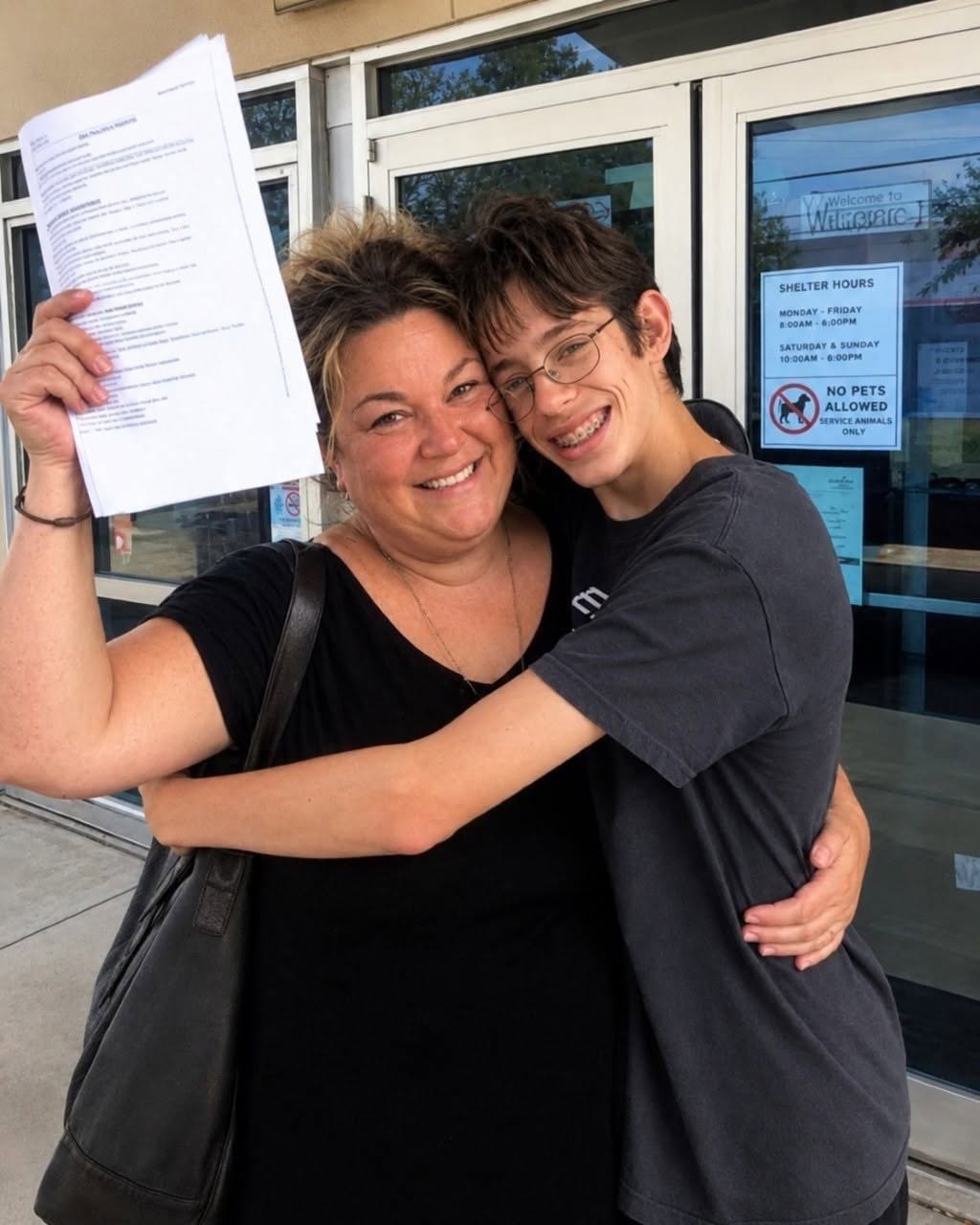
After losing both of her children in a tragic accident, Caroline never imagined she would become a mother again. But when she met Luke, a quiet teenager who had been through ten foster placements, she discovered that his difficult past held a heartbreaking secret.
Three years after losing both of her children in a car accident, Caroline had learned how to live with grief. At 47, she could get through a workday, prepare dinner, and smile when people asked how she was doing. But when she returned home each evening, the silence reminded her of everything she had lost.
Her daughter, Grace, had left a sweatshirt draped over her desk chair. Her son, Noah, still had three library books stacked beside his bed. Caroline couldn’t bring herself to move their belongings.
For a long time, she kept their bedroom doors closed. Eventually, she began leaving them open because the closed doors made the house feel even emptier.
People told her that grief would change with time. They were right, but the pain never completely disappeared. She simply learned how to carry it.
Then, one rainy Tuesday, Caroline walked into a foster care agency and asked about becoming a parent again.
The caseworker, Denise, listened carefully before asking a difficult question.
“Are you trying to replace your children?”
“No,” Caroline replied. “I don’t think anyone could.”
After months of training, interviews, home visits, and difficult conversations, Caroline attended an agency event where prospective parents could meet children in foster care.
Most of the younger children were playing together. One little girl dropped a box of crayons, and a teenage boy sitting by the window immediately put down his book to help her collect them.
He even crawled under a table to retrieve the last blue crayon.
Then he quietly returned to his seat.
Caroline noticed him.
“Who is that?” she asked.
Denise followed her gaze.
“His name is Luke. He’s sixteen.”
There was hesitation in her voice.
“He’s had ten foster placements. I want you to understand that before you decide to approach him.”
Caroline asked whether he had been violent or had harmed other children.
“No,” Denise answered. “But he’s complicated.”
Caroline disliked the word. She remembered how people had described her own son, Noah, when grief made him withdraw from the world. Sometimes, what adults called difficult behavior was simply pain they didn’t know how to understand.
“I’d still like to meet him,” she said.
Luke stood politely when Caroline approached.
“Hi, I’m Caroline.”
He gestured toward the empty chair beside him.
“Please, ma’am. You can sit here.”
Caroline smiled.
“I’m forty-seven, not ninety.”
Luke’s mouth twitched.
“I wasn’t implying anything.”
“You absolutely were.”
For the first time, he smiled properly.
They talked about the paperback in his hands, their favorite books, and the kinds of stories that stayed with a person long after the final page. Their conversation lasted nearly an hour.
When Caroline left, Denise reminded her that one good conversation didn’t guarantee a successful placement.
“I know,” Caroline said.
But she returned the following week.
And the week after that.
Four Months of Building Trust
Over the next four months, Caroline and Luke met at libraries, cafés, parks, and supervised outings. She discovered that he had a dry sense of humor, paid attention to small details, and remembered almost everything she told him.
He was guarded, but he was also thoughtful.
Once, Caroline mentioned that her daughter Grace had hated raisins. A few weeks later, Luke pushed a cookie across a café table toward her.
“Don’t worry,” he said. “I checked. No raisins.”
It was such a small gesture, yet Caroline had to look away for a moment.
Grief had taught her that small kindnesses could reach places that words couldn’t.
Eventually, they began discussing adoption.
“Would you really want that?” Luke asked.
“Yes.”
“Permanent?”
“That’s what adoption means.”
“What if I mess everything up?”
“Then we’ll deal with whatever happened.”
Luke looked down at the table.
“What if you regret it?”
Caroline considered the question carefully.
“Then I’d be an adult having a difficult feeling. You’d still be my son.”
He seemed unconvinced, but he didn’t argue.
When Luke finally moved into Caroline’s house, he behaved as though everything belonged to someone else and he was only borrowing it.
He made his bed before breakfast, washed his plate immediately after eating, and folded towels without being asked.
One Saturday, Caroline nearly tripped over a loose step on the porch. Luke appeared with a screwdriver and examined the damaged board.
“How long has this been like this?”
“A couple of years.”
He stared at her.
“You’ve been walking on this?”
“I enjoy danger,” she replied.
“You’re ridiculous.”
Caroline laughed. For the first time in years, laughter came naturally inside her home.
A month later, something even more meaningful happened.
“Mom, have you seen my charger?” Luke asked from the hallway.
They both froze.
Luke’s face turned red.
He had called her Mom without thinking.
Caroline pretended to search a kitchen drawer to hide the tears gathering in her eyes.
“Kitchen counter,” she said gently.
“Right.”
Neither of them mentioned the moment, but Luke continued calling her Mom.
By the time the adoption became final, Caroline had stopped wondering when he would become someone different. She had begun accepting him as he was.
Then, two weeks later, everything changed.
The Confession That Changed Everything
Luke barely touched his meatloaf at dinner.
Caroline noticed immediately. He loved meatloaf, and his sudden silence worried her.
“Sweetheart, what’s wrong?”
“I’m fine.”
“That’s a terrible lie.”
Luke’s fork scraped against his plate. His hands were trembling.
He looked at her, then quickly lowered his eyes.
“Mom, I need to tell you something.”
Caroline reached across the table, but Luke pulled away.
“You’ll probably wish you hadn’t adopted me.”
Her stomach tightened.
“Luke, what happened?”
He took a shaky breath.
“I have a sister.”
Caroline was surprised. Luke’s adoption paperwork had not indicated that he had a sibling with whom he was in contact.
“Where is she?”
“She’s my half-sister. Her name is Emma. She’s nine now.”
Luke explained that they had entered foster care together when Emma was very young. During those difficult years, he had taken on responsibilities no child should have had to carry alone.
He made her breakfast, helped her get ready for school, assisted with homework, and comforted her when she woke up frightened in the middle of the night.
Whenever Emma needed someone, she looked for Luke.
Then a family offered Emma a permanent home.
“They didn’t have room for me,” he said quietly.
Caroline felt a wave of sadness and anger.
“What happened after that?”
“Everyone kept asking what I thought was best for her. They said she deserved stability.”
Luke had been only fourteen.
“I said yes,” he continued. “I thought it was the right thing to do.”
After Emma was adopted, Luke struggled with the separation. He began withdrawing from people and refusing to participate in activities. Sometimes he stopped talking altogether. Other times, he said things he knew would push prospective families away.
He wasn’t violent. He wasn’t trying to hurt anyone physically.
He was trying to prevent himself from getting hurt again.
“If I got adopted somewhere else, Emma might think I’d chosen another family over her,” he explained.
Caroline listened without interrupting.
“How many families did you push away?”
Luke hesitated.
“Most of them.”
“Why?”
“Because leaving hurts less when you decide when it happens.”
Caroline felt tears gathering in her eyes.
Suddenly, the ten placements made sense. What others had seen as defiance might have been a frightened teenager trying to remain loyal to the only person he believed he couldn’t abandon.
Then Luke told her something that broke her heart.
“I was going to do it to you, too.”
Caroline stared at him.
“What do you mean?”
“When I moved in, I had a plan. I thought I’d stay for a couple of months, then start acting differently until you wanted me gone.”
“But you didn’t.”
Luke wiped his face with his sleeve.
“I liked being here. Then I started loving you.”
He covered his face with both hands.
“Then the adoption happened, and everyone was happy. But all I could think about was Emma. I called you Mom, and I felt like I was betraying her.”
Caroline moved from her chair and sat beside him.
“You should have told me.”
“I know.”
She took his hand.
“Listen to me. You are not going anywhere. You’re my son. Adoption wasn’t a trial period, and loving me doesn’t mean you love Emma any less.”
For the first time that evening, Luke stopped trying to hide his tears.
The Letters Nobody Had Received
The following morning, Caroline contacted Denise.
She wanted to understand why Luke’s sister had never been discussed during the adoption process and whether the children had any opportunity to maintain their relationship.
Denise explained that the history was contained in older records, but direct contact had become restricted years earlier while Emma adjusted to her adoptive placement. Letters were supposed to be handled through the adults involved, with contact to be reconsidered later.
“Was that ever revisited?” Caroline asked.
There was a long pause.
“It wasn’t handled well,” Denise admitted.
Luke had sent letters to Emma over the years. Birthday messages, Christmas greetings, and questions about school filled the pages.
Many ended with the same words:
I’m still your brother.
But he had never received a reply.
Caroline asked Luke whether he still had copies of his letters. He returned with an old shoebox containing dozens of them.
He had kept every one.
A few days later, Denise contacted Emma’s adoptive parents, Rachel and David. They agreed to discuss the possibility of a reunion, although they wanted the process to move slowly.
Caroline understood the need for care. Both children had experienced difficult circumstances, and a reunion needed to respect their feelings and boundaries.
But she also knew that waiting indefinitely could cause more pain.
“I’m not asking anyone to rush them into a meeting,” she told Denise. “I’m asking that we give both children a real opportunity to decide whether they want to reconnect.”
Eventually, everyone agreed to arrange a supervised meeting.
Luke was terrified.
“What if she doesn’t want me?” he asked.
“Then we’ll respect her feelings,” Caroline replied.
“What if she hates me?”
“Then you’ll hear the truth, and we’ll work through it together.”
He looked down.
“What if she forgot me?”
Caroline couldn’t promise that everything would be easy. She could only promise that he wouldn’t have to face the experience alone.
A Box Full of Unanswered Love
The meeting took place in Rachel and David’s living room.
Rachel looked nervous. David seemed uncomfortable as everyone settled into their seats.
After several minutes of strained conversation, Rachel went upstairs. When she returned, she was carrying a plastic storage box.
She placed it in front of Luke.
“What is this?” he asked.
“Letters,” she answered softly.
Luke lifted the lid.
Inside were envelopes bearing his name.
Dozens of them.
He picked up one. The handwriting was uneven and childish, the letters carefully formed by a young girl who had been trying to communicate with her brother.
Luke stared at the envelope.
“She wrote back?”
Rachel began to cry.
“Yes.”
“All this time?”
She explained that Emma had continued writing replies after Luke’s letters arrived. At first, the adults believed limiting direct contact would help Emma settle into her new home. They intended to share the letters when things became more stable.
But time passed.
The letters accumulated.
And the longer they waited, the harder it became to admit what had happened.
“We should have handled it differently,” David said quietly. “We should have made sure you two had a chance to stay connected.”
Luke opened the first envelope with trembling fingers.
Before he could read it, a door opened upstairs.
A young girl appeared on the staircase.
She looked toward the living room and stopped.
Luke slowly raised his head.
Neither of them spoke.
For a moment, he looked as though he was afraid to believe what he was seeing.
Emma disappeared upstairs.
Luke’s face crumpled.
“I knew it,” he whispered.
Then footsteps sounded overhead.
Emma came running back, holding a battered stuffed rabbit.
She stood in front of him and lifted it.
“You gave me Mr. Buttons.”
Luke covered his mouth.
He dropped to his knees, and Emma ran straight into his arms.
He held her tightly as both began to cry.
Caroline looked away, giving them the privacy the moment deserved.
After years of separation, misunderstandings, and unanswered questions, the brother and sister were finally standing together again.
Their relationship wasn’t magically repaired in a single afternoon.
But something important had begun.
Learning That Family Can Grow
The months that followed brought supervised visits, phone calls, birthdays, and eventually weekends together, as everyone worked to rebuild trust at a pace that felt right for the children.
There were difficult moments. Emma and Luke had grown up separately, and they had memories, experiences, and questions they needed time to share.
Caroline made one thing clear from the beginning: Emma was not competing with her, and Luke would never have to choose between the people he loved.
He had spent years believing that family meant choosing one person at the expense of another.
Now he was beginning to understand that love didn’t have to work that way.
Months later, Caroline found Luke outside repairing the loose porch step again.
Emma sat beside him, offering advice despite having no experience with tools.
“You’re holding it wrong,” she declared.
“You’ve never held a hammer,” Luke replied.
“I’ve seen people do it.”
“On television?”
“Still counts.”
Caroline stepped onto the porch carrying a pitcher of lemonade.
Emma reached for the hammer, but Luke pulled it away.
“Absolutely not.”
“Why?”
“Because I enjoy having all ten of your fingers attached.”
Emma rolled her eyes.
“Mom, please tell him I’m allowed to help.”
Luke looked at Caroline.
“Mom, please tell her she’s not touching this.”
For a brief moment, Caroline noticed the old fear in his expression. He looked between her and Emma, as though he were waiting for a decision that would force him to choose.
But Emma simply crossed her arms.
“Fine. Ask your mom. You’re both annoying.”
Luke blinked.
Then he laughed.
A second later, the two were arguing about the hammer again.
Caroline watched them from the porch, smiling through tears.
For years, her home had been defined by silence. She had believed that losing her children meant a part of her life would remain empty forever.
She hadn’t expected to become a mother again. She certainly hadn’t expected that opening her heart to one teenager would also lead to the rediscovery of a family bond that had been buried beneath years of misunderstanding.
Luke hadn’t needed a perfect home or a parent who could erase his past. He needed someone willing to listen, remain present, and help him understand that his fears didn’t have to determine his future.
And Emma needed the chance to know that her brother had never stopped loving her.
Caroline looked at the two children arguing in the afternoon sunlight.
The house wasn’t silent anymore.
And, finally, nobody had to leave to make room for someone else.
Sometimes, the most important thing a family can offer is the reassurance that love is not a competition, and that there is room for everyone to belong.